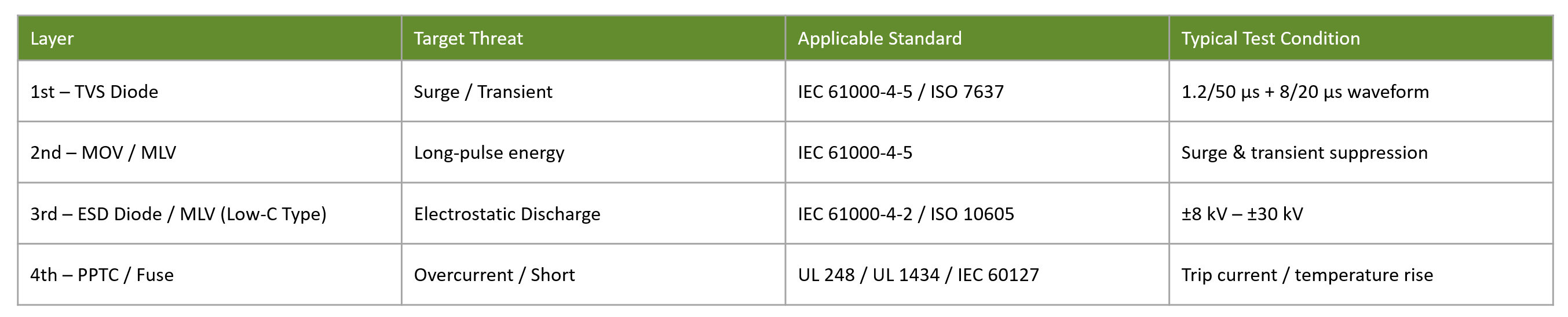
Comparison of Electronic Protection Components and International Standards

Information

Why Multi-Layer Protection Design Is Necessary

test

Electronic systems encounter various transient threats during operation, including ESD, surge, and overcurrent events.

A single protection component cannot effectively cover all voltage and energy ranges.

Therefore, adopting a multi-layer protection strategy enables each device to handle specific energy and time domains — ensuring stable system behavior, extended product life, and compliance with safety standards.

Major Threats and International Standards

test

To ensure product reliability across different industries, protection devices must comply with international EMC and safety standards.

These standards — such as IEC 61000 and ISO 7637 — define the test conditions, pulse waveforms, and required immunity levels for each type of electrical stress.

Designing according to these standards guarantees interoperability and compliance for global market deployment.

Comparison of Main Protection Components

test

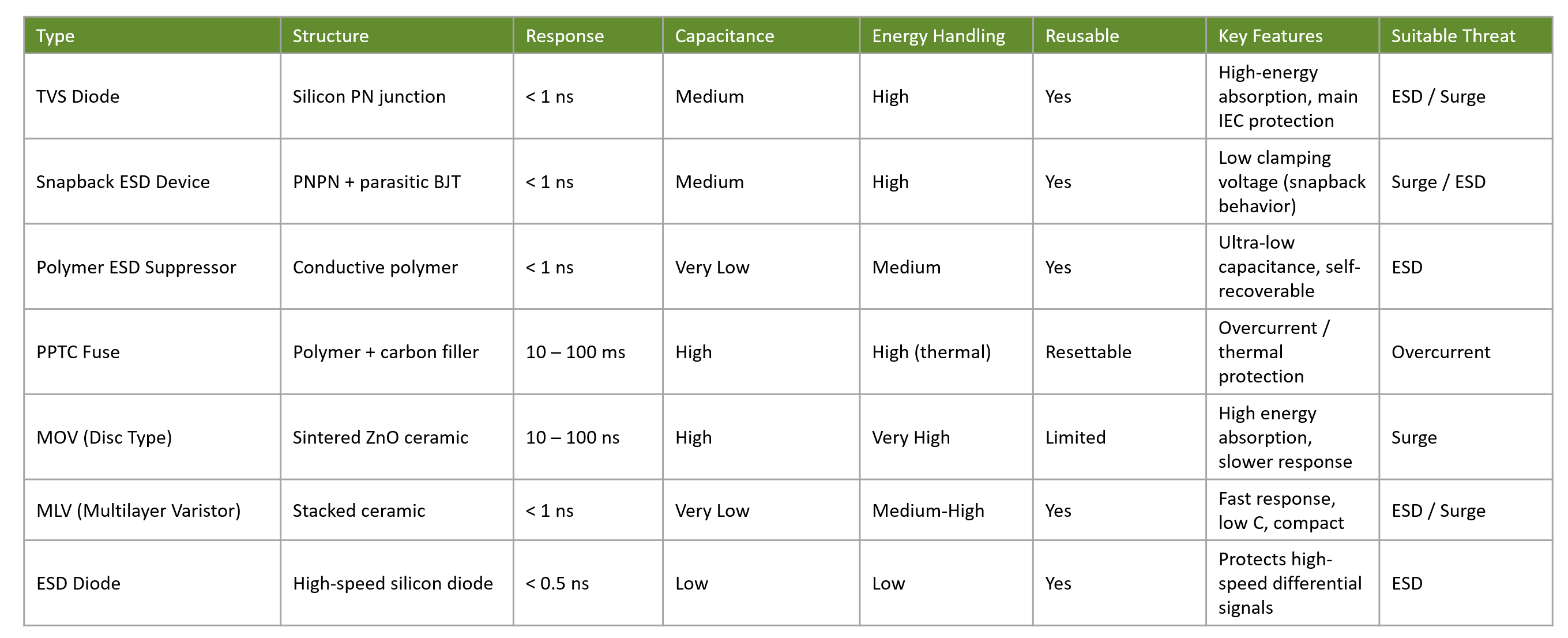
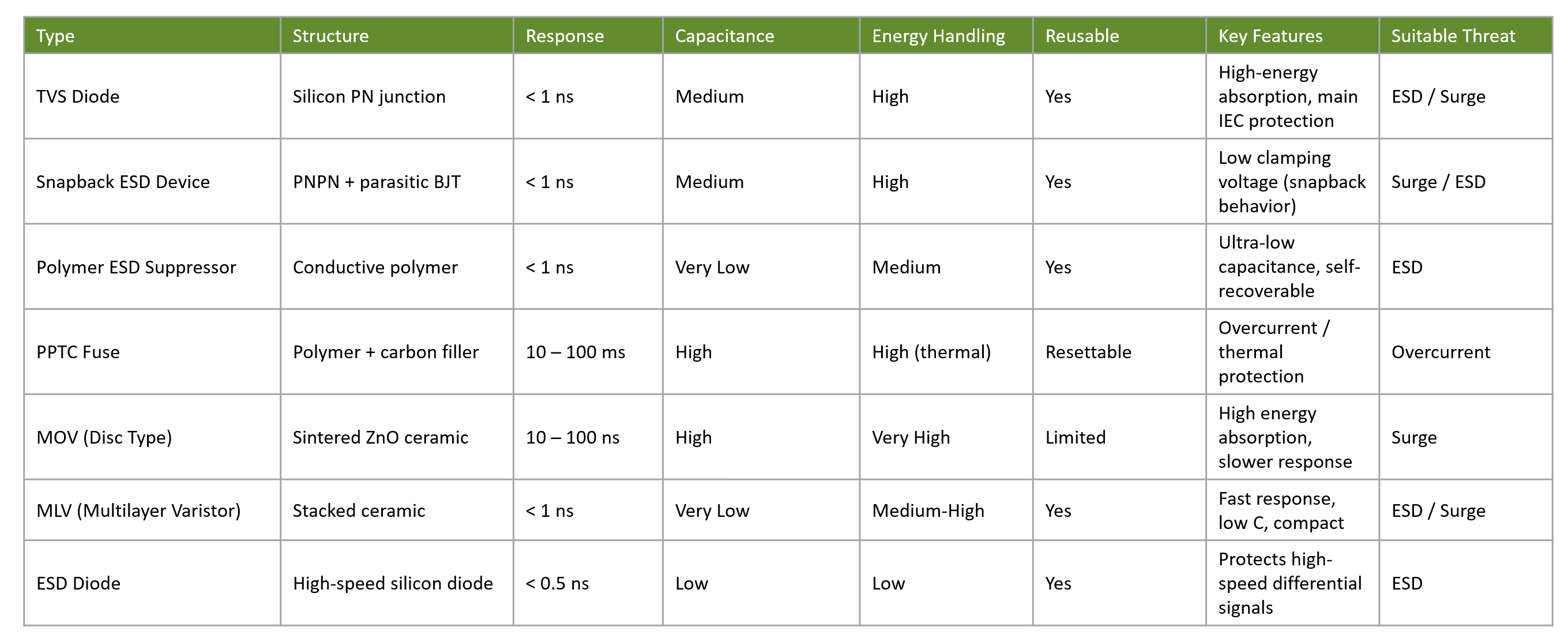
Each protection component type has unique structural and electrical characteristics.

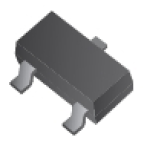
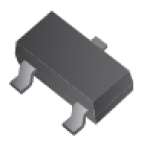
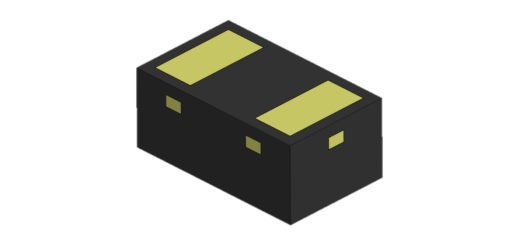
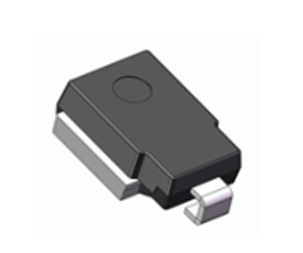
TVS diodes react instantly to high-voltage surges, MOVs and MLVs absorb high-energy transients, ESD diodes and polymer suppressors provide ultra-fast low-capacitance protection, while PPTC fuses handle long-duration overcurrent events.

Selecting the right combination ensures full coverage from nanoseconds to milliseconds.

Protection Layers and Standards Mapping

test

A robust protection design divides the system into layers, where each layer addresses a specific energy level or transient type.

For example, the TVS diode serves as the first barrier for high-energy surges, while MLV or ESD diodes handle high-speed electrostatic events near sensitive ICs.

System Protection Architecture Example

In practical circuit design, the multi-layer protection path starts at the external connector and cascades through several stages — TVS, MLV, ESD, and PPTC — before reaching the controller IC.

This ensures that no single surge or ESD event can reach the core logic unattenuated.

Component Function Differences and Application Guidelines

test

Choosing protection components depends on the interface type, voltage level, and signal speed.

For instance, ESD Diode is preferred for USB4 or HDMI 2.1 due to their ultra-low capacitance, while TVS diodes remain ideal for power and automotive lines.

Compliance Strategy by Application Market

test

Each market segment prioritizes specific standards and test requirements.

Consumer electronics focus on IEC 61000 compliance; industrial control systems require surge and overcurrent endurance; automotive designs must meet ISO 7637 and AEC-Q200 standards for transient and ESD robustness.

Conclusion

In modern electronic design, the continuous increase in data rates, power density, and circuit integration requires a precise balance between protection speed, robustness, and reliability.

Among all protection strategies, TVS Diodes and ESD Suppressors remain the most critical foundation for safeguarding sensitive ICs and signal interfaces from transient and electrostatic events.


While many suppliers provide similar protection components, Comchip Technology distinguishes itself with a comprehensive range of high-reliability TVS and ESD devices.

Comchip products are designed for ultra-fast response, stable and accurate clamping, and low-capacitance performance—ensuring signal integrity and long-term stability even in high-speed and high-density systems.


Through continuous innovation in materials, packaging, and process control, Comchip’s protection portfolio offers:


  • Consistent performance across wide temperature and surge conditions


  • Extended product lifetime with minimal leakage variation


  • Compact and reliable surface-mount packages suitable for advanced designs


As the electronics industry continues to evolve toward higher performance and tighter integration,

Comchip remains a trusted partner in TVS and ESD protection—

offering the ideal balance of protection strength, cost efficiency, and long-term reliability for modern electronic systems.